The Best Seat in the House Faces the Water: How Lakeview Residents Turn Windows Into Destinations
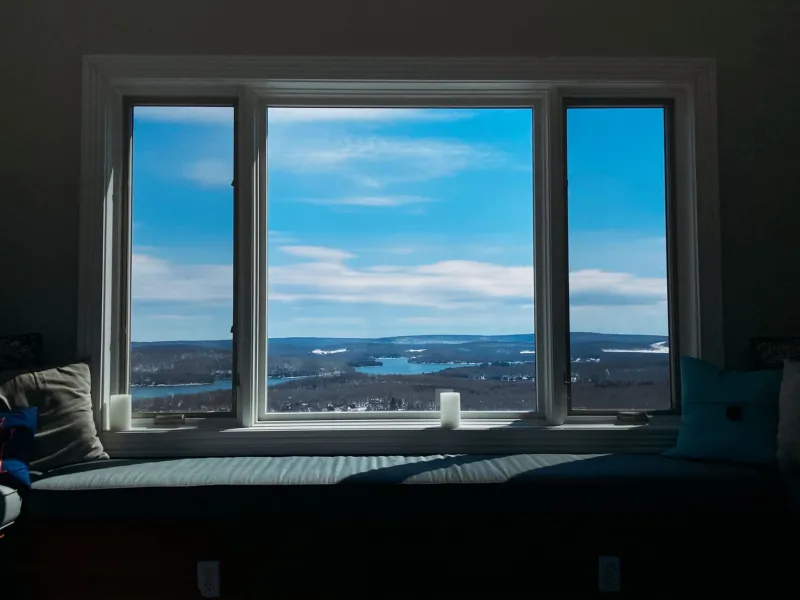
Every home on the water has a view. What separates a house that merely has one from a house that is built around one comes down to a question real estate listings rarely answer: where, exactly, do you stand when the light hits?
Spend an afternoon talking with Lakeview residents and a pattern emerges. Ask which room they treasure most, and almost nobody names a room at all. They name a window. The one above the kitchen sink. The narrow pane beside the reading chair. The picture window that turns the living room into a screening room for weather.
For buyers evaluating Lakeview properties, understanding this distinction — a view as an amenity versus a view as an organizing principle — can shape both which home you purchase and how you furnish it afterward.
The Kitchen Sink Standard
It is a running joke among longtime Lakeview homeowners that the most contested window in any waterfront house is the one over the kitchen sink. The reason is practical as much as poetic: it is the window you look through daily, often for long stretches, often without planning to.
"I bought this house for the porch," one resident admits. "I stayed for the sink window. Twenty minutes of dishwashing feels like twenty minutes of watching the lake negotiate with the sky."
For buyers, this suggests a simple evaluation tactic: when touring a Lakeview home, spend a full minute at the kitchen window. Check the sightline to the water, the height of the sill, and whether afternoon glare will force you to squint through dinner prep. Homes where the sink window was clearly an afterthought tend to reveal it quickly.
Reading Nooks and Morning Light
Not every beloved window faces the water head-on. Some of the most cherished spots in Lakeview homes are oblique — an east-facing pane that catches first light, a corner window in a second-floor bedroom where the lake appears at an angle, framed by rooftops or tree lines.
Designers refer to these as borrowed views, and they matter for buyers working with a budget. A home without a wall of glass facing the water may still offer two or three well-placed windows that capture it partially. These are the spaces that become reading nooks, coffee stations, and morning writing desks — often by accident, occasionally by design.
When evaluating a property, walk it at the hours you will actually use each room. Morning light behaves differently than evening light, and a window that seems unremarkable at a 2 p.m. showing may be transformative at 7 a.m.
Furnishing Around the View
Once you own the window, the challenge becomes compositional. Lakeview residents who have done this well tend to follow a few consistent principles:
- Keep sightlines low. Furniture with high backs and tall shelving placed between seating areas and windows quietly amputates a view. Low-profile sofas, open-leg chairs, and floating shelves preserve the visual corridor.
- Anchor seating toward the glass. In living rooms with water views, the primary conversation area almost always orients toward the window rather than a television. Residents who fight this instinct often end up with a room no one sits in.
- Dress windows minimally. Heavy drapes are the enemy. Sheer panels, top-down bottom-up shades, or nothing at all keep the lake visible on your terms — privacy when you want it, openness when you don't.
- Mind the reflection. At night, interior lighting turns well-placed windows into mirrors. Dimmable, warm-toned lamps positioned away from the glass solve most of it.
None of this requires a renovation budget. Most of it requires only the discipline to let the view — not the furniture arrangement — dictate the room.
What Buyers Should Ask Before Signing
If the window is the destination, treat it like one during your search. A short list worth carrying to every showing:
- Orientation. Which way does the primary view face? West-facing glass delivers sunsets and afternoon heat; east-facing glass delivers sunrise and gentler temperatures. Neither is wrong, but one will suit how you live.
- Sill height and depth. A deep window seat changes the calculus entirely. A sill above counter height may block the view from a seated position.
- Tree lines and neighboring structures. Views are not guaranteed in perpetuity. Ask about lot lines, local building restrictions, and mature trees on adjacent parcels.
- Glass quality. On the water, windows work harder. Double- or triple-pane units with low-E coatings protect both your comfort and the view itself, which condensation and interior fogging can obscure.
The Room You Cannot Furnish
There is a reason so many Lakeview homeowners describe their favorite window in nearly identical language: it is the one place in the house where the scenery does the decorating. No paint color, no rug, no art purchase delivers the same daily return.
Buyers who understand this early tend to shop differently. They stop asking does this house have a view and start asking where will I stand when I want to look at it. The answer, in the right home, is everywhere that matters.