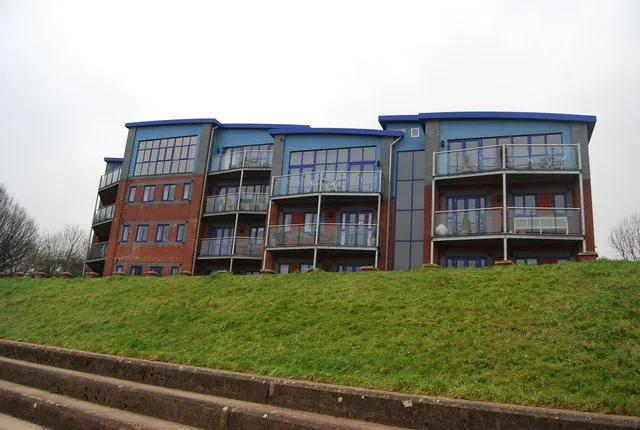
From Personal Retreat to Revenue Stream: The Case for Lakeview Waterfront Vacation Rentals

Photo: jebule41, CC BY 2.0, via Wikimedia Commons
Not long ago, the idea of converting a Lakeview waterfront property into a short-term vacation rental would have struck most local homeowners as either unnecessary or logistically daunting. Today, that calculus has shifted considerably. Across the neighborhood, owners are quietly — and in some cases quite profitably — transforming their lakeside homes into sought-after destinations for travelers who want the experience of waking up on the water without the permanence of ownership.
The numbers behind this trend are worth examining carefully, because they reveal both a genuine opportunity and a set of responsibilities that any prospective investor-operator must take seriously.
Why Lakeview's Waterfront Commands Premium Short-Term Rates
The short-term rental market is, at its core, a market of differentiation. Travelers using platforms such as Airbnb and Vrbo are not simply purchasing a bed and a roof; they are purchasing an experience. Waterfront properties in Lakeview offer an experience that is inherently difficult to replicate: direct or near-direct access to the lake, unobstructed water views, and the ambient qualities — the light, the sounds, the air — that blue-space environments uniquely provide.
This differentiation translates directly into rate premiums. Industry data from short-term rental analytics firms, including AirDNA, consistently show that waterfront listings command nightly rates between 40 and 80 percent higher than comparable non-waterfront properties in the same market. In a neighborhood like Lakeview, where the supply of genuine water-adjacent inventory is finite by definition, that premium tends to be durable rather than cyclical.
Occupancy rates tell a similar story. Well-managed waterfront listings in desirable lakeside communities routinely achieve seasonal occupancy rates above 70 percent during peak months, with annual averages that can support meaningful debt service or generate net income when acquisition costs are properly structured.
Seasonal Patterns and How Savvy Operators Respond
Any honest assessment of the Lakeview short-term rental opportunity must account for seasonality. The lake is the asset, and the lake is not equally compelling to visitors in every month of the year. Summer — roughly Memorial Day through Labor Day — represents the undisputed peak season, when demand is strongest, rates are highest, and booking windows extend weeks in advance. Properties with boat docks, fire pits, and outdoor entertaining spaces are particularly sought after during this window.
Spring and fall present what experienced operators describe as the "shoulder season" — a period of moderate demand that rewards creative marketing. Positioning a Lakeview property as an autumn foliage retreat, a quiet off-season escape for remote workers, or a base for fall fishing excursions can meaningfully extend the revenue-generating calendar beyond the summer core.
Winter is the most challenging period, but it is not necessarily a write-off. Operators who invest in amenities such as hot tubs, fireplaces, and high-quality streaming setups find that a subset of travelers actively seeks lakeside winter retreats. Ice fishing, snowshoeing, and the simple appeal of a cozy shoreline cabin during the cold months sustain a modest but real off-season market.
The most financially successful Lakeview operators approach their annual calendar strategically, pricing dynamically in response to local events, regional travel patterns, and real-time platform data rather than setting static rates and hoping for the best.
Platform Strategy and Guest Experience
Choosing the right platform — or combination of platforms — is among the earliest and most consequential decisions a new operator will make. Airbnb and Vrbo dominate the short-term rental landscape in the United States, but they attract meaningfully different traveler demographics. Vrbo skews toward families and longer-stay bookings, which aligns well with the Lakeview waterfront product. Airbnb casts a wider net and tends to generate higher overall booking volume, particularly for weekend stays.
Many successful Lakeview operators maintain active listings on both platforms while also investing in a direct booking website — an approach that reduces platform fee dependency over time as a loyal guest base develops.
Guest experience, meanwhile, is not a soft consideration. It is a direct driver of review scores, and review scores are the primary currency of visibility on every major platform. Operators who provide detailed welcome guides, reliable Wi-Fi, quality linens, and responsive communication consistently outperform competitors who treat the guest experience as secondary to the financial mechanics. A Lakeview waterfront property with a 4.9-star rating will outperform an otherwise comparable property rated at 4.5 by a margin that justifies virtually any investment in hospitality quality.
Regulatory Considerations: Know Before You List
The short-term rental regulatory environment in the United States is evolving rapidly and varies significantly by municipality. Before listing any Lakeview property on a short-term rental platform, prospective operators must conduct thorough due diligence on local ordinances, homeowners association rules, and any applicable state or county licensing requirements.
Some jurisdictions impose caps on the number of nights a property may be rented annually, require owner-occupancy for at least a portion of the year, or mandate specific safety certifications. Others have implemented registration systems that, while not prohibitive, require timely action to remain compliant. Fines for operating outside local regulations can be substantial, and platform delistings for regulatory non-compliance can eliminate income streams with very little warning.
Engaging a local real estate attorney or a property management firm with specific short-term rental expertise before launching a Lakeview vacation rental is a prudent step that experienced investors rarely skip.
The Investment Thesis in Practice
Consider the experience of a Lakeview property owner who purchased a three-bedroom waterfront home several years ago with the dual intention of personal use and short-term rental income. By blocking personal use weeks during the shoulder season rather than peak summer, maintaining a professional cleaning and turnover service, and responding to guest inquiries within two hours, the owner achieved sufficient rental income during the first full operating year to cover the property's carrying costs — mortgage, insurance, maintenance, and platform fees — with a modest surplus.
That outcome is not universal, but it is representative of what disciplined, well-prepared operators can achieve in a market where the underlying product — a waterfront home in a desirable neighborhood — is genuinely compelling to a broad traveler audience.
A New Framework for Waterfront Ownership
For buyers evaluating Lakeview waterfront properties today, the short-term rental model represents a meaningful expansion of what ownership can mean. A lakeside home need not be a pure consumption asset, used only by its owners and sitting idle the remainder of the year. With thoughtful management, regulatory compliance, and a genuine commitment to the guest experience, it can function as a hospitality business that offsets ownership costs or generates independent income.
At Lakeviews on Reed, we encourage prospective buyers to approach this opportunity with both enthusiasm and rigor. The water's edge has always been a place of value. In the current market, that value has simply found new and compelling ways to express itself.