Where the Water Meets the Property Line: A Lakeview Resident's Guide to Waterfront Rights and Shared Access
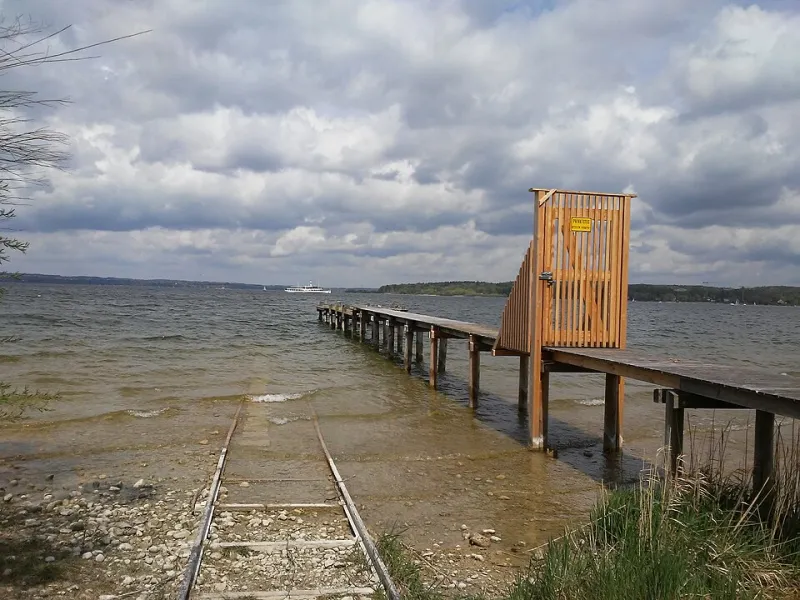
Photo: Ottantafame, CC BY-SA 4.0, via Wikimedia Commons
The appeal of a Lakeview waterfront address is immediate and intuitive — the view, the access, the particular quality of light that only a lakeside setting can offer. What is somewhat less intuitive, and considerably more consequential, is the legal framework that governs exactly what that waterfront access entails. Who owns the dock? Who may use the beach? What happens when a neighbor's boat lift encroaches on your deeded slip? These are not hypothetical concerns. They are the kinds of questions that waterfront residents — whether buyers, renters, or long-term homeowners — encounter regularly.
This guide is intended to demystify the most common waterfront access issues in Lakeview, offer practical orientation for those entering the market, and provide a foundation for resolving the disputes that occasionally arise when neighbors share something as valuable — and as finite — as the shoreline.
Understanding Riparian Rights: What They Are and What They Are Not
In most U.S. states, property owners whose land borders a natural body of water hold what are known as riparian rights — a bundle of legal entitlements tied to the water's edge. These rights typically include the ability to access the water, install a dock or pier (subject to permitting), and make reasonable use of the water surface adjacent to the property.
However, riparian rights are not absolute, and they vary meaningfully by state and municipality. In Illinois, where Lakeview sits within the city of Chicago, the specific contours of waterfront entitlement are shaped by a combination of state law, city ordinance, and the terms of individual property deeds. Prospective buyers should never assume that physical proximity to the water automatically confers any particular set of privileges. The only reliable way to understand what a given property actually includes is to review the deed, any recorded easements, and applicable local regulations — ideally with the assistance of a real estate attorney who has experience in waterfront transactions.
Renters face a related but distinct challenge: the lease agreement, rather than the deed, defines their access rights. A lease that does not explicitly address dock usage, beach access, or waterfront amenities leaves the tenant in an ambiguous position that can lead to friction with both the landlord and neighboring property owners.
Easements: The Rights That Run With the Land
An easement is a legal right granted to a party — which may be a specific individual, a neighboring property owner, or the general public — to use a portion of land for a defined purpose. In Lakeview's waterfront context, easements most commonly arise in two forms.
Access easements allow parties who do not own lakefront property to reach the water by crossing land that belongs to someone else. These are particularly common in neighborhoods where not every lot has direct lake frontage. If you are considering a non-waterfront property with an advertised "lake access," the nature of that access almost certainly involves an easement — and the specific terms of that easement (who may use it, during what hours, and for what activities) deserve very careful review before any commitment is made.
Shared dock easements are a second common arrangement, and they introduce their own set of dynamics. Two or more property owners may share legal rights to a single dock or pier, with each party's entitlements and responsibilities defined by a recorded agreement. These arrangements can function smoothly for years, but they become a source of significant tension when the original agreement is vague, when one party's use patterns change, or when a property is sold and the new owner is unfamiliar with the existing arrangement.
Before purchasing any Lakeview waterfront property, a thorough title search should identify all recorded easements. Do not rely solely on seller disclosure; easements that have been in place for decades may not be top of mind for a seller who has long since accepted them as background conditions of ownership.
Dock-Sharing Agreements: Practical Protocols for a Common Arrangement
For properties that involve shared dock access, a well-drafted written agreement is not a formality — it is the primary tool for preventing future conflict. The most effective agreements address several specific issues that, left undefined, reliably become sources of dispute.
Designated slips or sections. Where possible, the agreement should specify which portion of the dock is allocated to each party, rather than leaving usage to informal negotiation.
Scheduling and priority. During peak season, demand for dock space can exceed availability. An agreement that establishes a clear protocol for resolving scheduling conflicts — whether through a rotating priority system, advance reservation requirements, or another mechanism — removes the ambiguity that generates friction.
Maintenance responsibilities. Docks require ongoing upkeep, and the costs and labor associated with that maintenance should be allocated explicitly. An agreement that is silent on maintenance responsibilities will eventually produce a disagreement about who owes what.
Guest and sublessee access. If a property is rented seasonally, does the tenant inherit dock access? May guests of one party use the shared facility? These questions should be answered in writing before they arise in practice.
For residents who find themselves party to an existing dock-sharing arrangement that lacks adequate documentation, it is worth the modest investment of time and legal fees to formalize the arrangement while the relationship with neighbors is cordial. Attempting to negotiate terms during an active dispute is considerably more difficult.
Beach Access and Public Rights
In many lakefront communities, the question of public beach access is a recurring source of tension. Private property owners sometimes assume that their ownership of the adjacent upland gives them exclusive control over the water's edge, while members of the public may assert a right to walk or recreate along the shoreline.
The legal answer depends on the specific body of water, the state's public trust doctrine, and the terms of any recorded dedications or public access easements. In general, buyers and renters should not assume that a private lakefront setting is entirely insulated from public use claims. Consulting with a local attorney before making assumptions — or before taking actions designed to exclude others — is strongly advisable.
When Disputes Arise: Practical Paths Forward
Even with well-documented agreements and good-faith intentions, waterfront neighbors occasionally find themselves in conflict over access, usage, or boundaries. The most effective first step is almost always direct, civil conversation. Many disputes stem from misunderstanding rather than bad faith, and a brief, respectful exchange can resolve issues that might otherwise escalate unnecessarily.
When direct communication does not produce resolution, mediation — conducted by a neutral third party — offers a structured alternative that is less adversarial and less expensive than litigation. Many municipalities and community organizations offer access to mediation services specifically designed for neighbor disputes.
Legal action, while sometimes necessary, should be treated as a last resort rather than a first response. Waterfront communities in Lakeview are, at their best, defined by a cooperative spirit that reflects the shared appreciation of a remarkable natural setting. Preserving that spirit is worth the effort of working through disagreements thoughtfully.
Before You Commit: The Questions to Ask
Whether you are buying or renting, the following questions should be answered — in writing, with documentation — before you finalize any waterfront commitment in Lakeview:
- What water access rights are specifically conveyed by the deed or lease?
- Are there any recorded easements affecting the property, and what do they permit?
- Is there a shared dock or beach access arrangement, and is it governed by a written agreement?
- Are there any active or historical disputes with neighboring properties regarding waterfront usage?
- What local permits or regulations govern dock installation, modification, or use?
At Lakeviews on Reed, we believe that fully informed residents make the happiest waterfront neighbors. Understanding what you are entitled to — and what you are not — is the foundation of a genuinely rewarding life at the water's edge.