Chasing the Golden Hour: How West-Facing Homes Turn Lakeview Evenings Into the Best Part of the Day

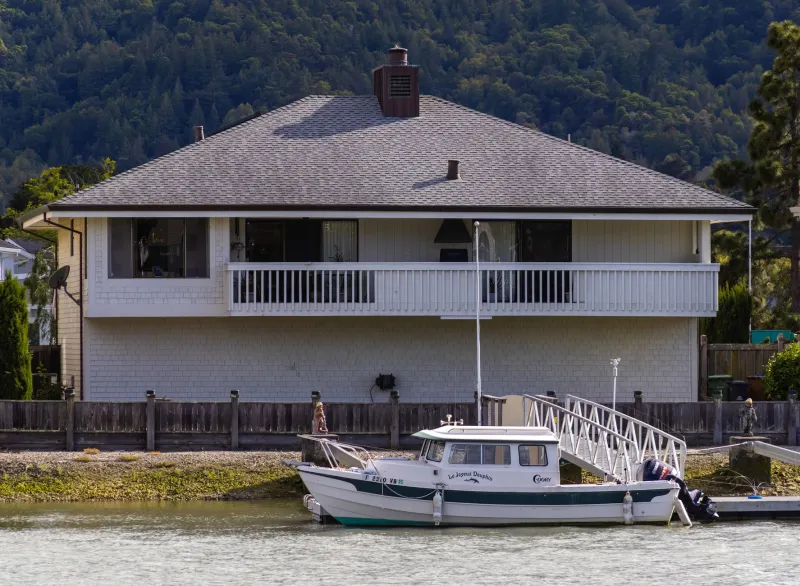
Photo: Александр Байдуков, CC BY-SA 4.0, via Wikimedia Commons
Ask a longtime Lakeview resident what they love most about their home, and you may be surprised by the answer. It's rarely the square footage or the upgraded kitchen. More often, it's the hour between five and seven in the evening, when the western sky turns amber over the water and the whole neighborhood seems to slow down on purpose.
For buyers evaluating waterfront properties in Lakeview, this daily ritual is more than a charming anecdote. It's a measurable feature of a home — one shaped by orientation, window placement, and outdoor layout — and it deserves the same scrutiny you'd give a roof or a foundation.
Why Evening Light Changes How a Home Lives
Real estate professionals have long emphasized morning light for early risers, but waterfront communities operate on a different rhythm. When the water sits to the west of a property, the most valuable hours of the day align with the most beautiful light. Homeowners describe a shift in behavior: dinners drift onto the deck, evening walks cluster around sunset time, and the living room's large windows become the natural gathering point.
Psychologists who study environmental design have noted that access to natural evening light is associated with improved mood and a cleaner transition from work mode to rest. For remote workers especially — a growing share of Lakeview's buyer pool — a home that offers a genuine sunset view functions as a built-in end-of-day ritual. The workday ends when the light changes, not just when the laptop closes.
There's also a social dimension. On west-facing streets near the shoreline, it's common to see neighbors drift toward the water with a drink in hand as the sun drops. Decks and patios oriented toward the evening sun become informal meeting places, and over time, that rhythm builds the kind of block-level community that no amenity package can replicate.
Orientation 101: What Buyers Should Know Before a Showing
Sun path basics matter more on the water than in a typical subdivision. In the continental United States, the sun rises in the east and sets in the west, arcing high in summer and low in winter. A home with primary living spaces and outdoor areas facing west or southwest will capture the golden hour; a home with the water at its back will watch that light reflect off neighboring properties instead.
Before scheduling showings, buyers can do a surprising amount of homework from a desktop:
- Use a sun-path tool. Free apps and websites can overlay the sun's trajectory on any address, showing exactly where light will fall at 6 PM in July and in December.
- Study listing photos for shadows. Evening photos taken from a deck tell you whether the sun sets in front of the home or behind it.
- Check the street grid. In Lakeview, streets running perpendicular to the shoreline often deliver the strongest western sightlines down their lengths.
None of this replaces standing on the property, but it narrows the field considerably.
How to Evaluate Light Exposure in Person
Whenever possible, schedule evening showings — ideally in the 5 to 7 PM window during the season you'll actually live there. Arrive thirty minutes before sunset and pay attention to a few specifics:
Where the light lands inside. West-facing living rooms glow in the evening but can run warm in late summer. Note whether large windows have shading options — deep overhangs, mature trees, or quality blinds — that temper afternoon heat without blocking the view.
How the outdoor space is positioned. A deck that basks in the sunset is a genuine asset; a patio shaded by the house itself at 6 PM will be used far less. Imagine the furniture layout and ask whether the space invites you to linger.
What stands between you and the horizon. A perfect western exposure can be undone by a neighboring roofline or a stand of trees two lots over. Walk the property line and look west from every main window, not just the ones staged for photos.
Winter behavior. In the northern US, the winter sun sets far to the southwest and sits low. A view that's spectacular in June may be filtered or blocked in January. Ask the seller how the light changes across the year — longtime owners can usually answer in detail.
Balancing Sunset Views Against Other Priorities
A word of perspective: orientation is one factor among many. A west-facing home with a failing seawall, a busy road between the lot and the water, or a layout that wastes its best light on a laundry room is not automatically the right choice. The goal is to rank evening light honestly alongside the fundamentals — structure, flood exposure, insurance costs, and commute — rather than letting a beautiful 5 PM cloud deck make the decision for you.
It's also worth noting that not every buyer wants maximum western exposure. Morning people, avid gardeners, and anyone sensitive to heat may prefer eastern or southern light. The advantage in Lakeview is inventory: the neighborhood's mix of streets and lot orientations means buyers can genuinely choose the light they want rather than settle for it.
The Takeaway for Lakeview Buyers
A home's orientation won't show up on the inspection report, and no appraiser will assign it a dollar value. Yet among residents who live along the water, the evening light is consistently cited as the feature they'd refuse to give up. When you tour your next Lakeview property, do yourself one favor: visit at golden hour. Stand where the living room meets the deck, face west, and picture the routine. If you find yourself reluctant to leave — well, that's the kind of data no spreadsheet can capture.